In an industrial context increasingly focused on sustainability and efficiency, traditional ingredients are finding new applications outside the food sector. This is the case with pregelatinised flours, which, thanks to their functional properties, are establishing themselves as technical solutions in industries such as wood, biomass and lignocellulosic materials.
This versatility addresses the urgent need in today’s markets to find bio-based alternatives that not only reduce the carbon footprint, but also optimise operating costs and comply with international regulatory requirements on eco-design and the circular economy.
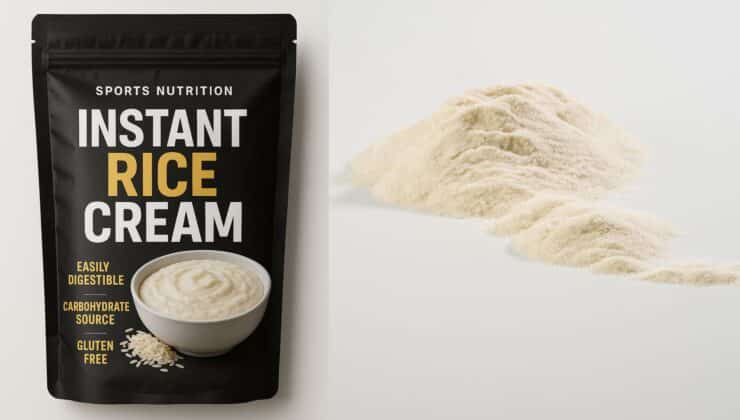
These products, obtained through extrusion processes that alter the structure of the starch, are able to hydrate rapidly and develop viscosity without the need for cooking. This characteristic enables them to act as binding and structure-forming agents, which is crucial in numerous industrial applications where binding or stabilising properties are required.
Innovation in the timber and engineered wood panels industry
One of the areas with the greatest potential is the manufacture of wood-based panels (such as particleboard or MDF). In this sector, pre-gelatinised flours can partially or completely replace traditional formaldehyde-based resins, which have significant limitations in terms of emissions, dependence on fossil raw materials and regulatory pressure.
Global regulations, which are becoming increasingly restrictive with regard to volatile organic compounds (VOCs) and the classification of formaldehyde as a substance of particular concern, are forcing manufacturers to redesign their resins. Against this backdrop, plant-based solutions are emerging as the most viable alternative for maintaining competitiveness in demanding international markets.
Thanks to their ability to form a continuous viscous phase and coat fibres, these ingredients act as natural binders, improving the structural cohesion of the material. Furthermore, they enable the development of hybrid formulations with other agents, offering a bio-based option that is more sustainable and adaptable to different production processes.
When incorporated into mixtures of wood particles or fibres, pre-gelatinised flours act as molecular bridges, facilitating efficient mechanical pressing. Hybrid formulations combine the best of green chemistry with conventional additives, drastically reducing the overall environmental impact of the finished board without compromising its bending strength or dimensional stability.
Optimisation of pellet and biomass production
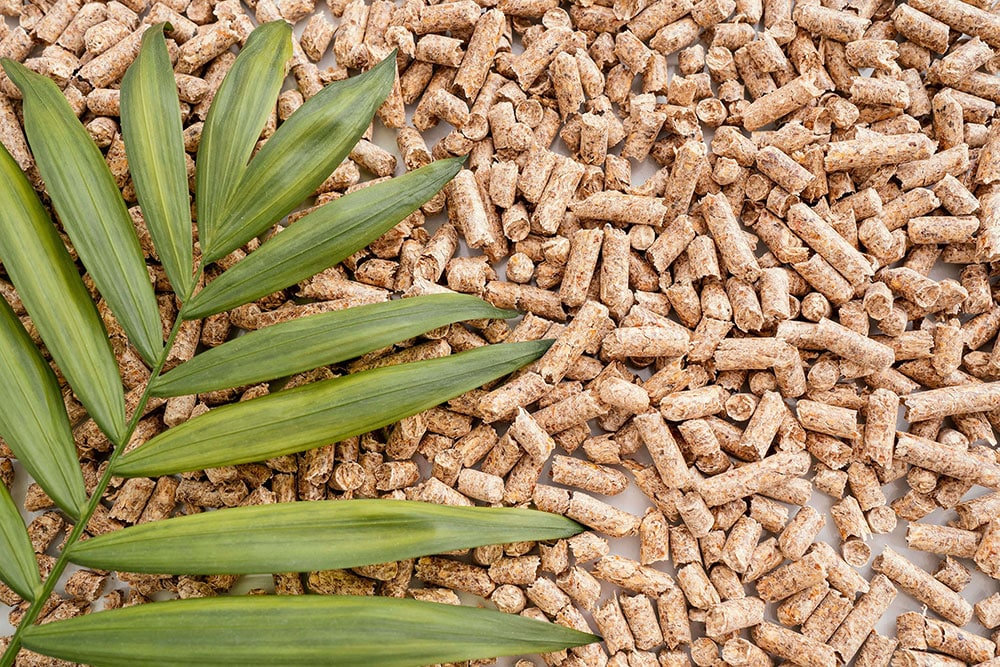
Another important application is the production of biomass briquettes and pellets, where pre-gelatinised flours help to optimise both the process and the quality of the final product.
The compaction of biomass requires rigorous control of physical variables to ensure that the pellets retain their integrity from the production plant to the boilers of end users.
In this field, one of the common challenges is the variability of the raw material and the limited binding capacity of certain types of biomass. Compared with conventional starches, which require heat and water to be activated, pregels offer a key advantage: they act immediately as adhesives and develop viscosity at low temperatures.
This immediate cold response is essential when working with agricultural by-products, softwoods or heterogeneous forestry residues whose natural lignin content is insufficient to act as a binding agent during extrusion.
This translates into tangible benefits such as greater mechanical strength of the pellets, reduced fines, improved durability and transportability, lower consumption of water, steam and energy, and greater efficiency at lower dosages.
New horizons: sustainable packaging and additives
Beyond these sectors, pregelatinised flours are opening the door to new applications in sustainable packaging, adhesives for composite materials and lightweight structural systems. In all these cases, their role as rheological modifiers and binding agents makes it possible to improve technical performance whilst adopting a more environmentally friendly approach.
In the packaging sector, for example, they are used to develop inner liners and technical paperboard with improved barrier properties. Their excellent performance as a rheology modifier allows for precise control of the flow and initial tack of industrial glues and water-based adhesives, speeding up drying times on high-speed production lines.
Towards a green and efficient industrial transition
The evolution of extrusion products shows that their potential extends far beyond the food sector. Their ability to act as efficient binders, reduce environmental impact and optimise industrial processes makes them a key technology for the transition towards more sustainable production models.
At Molendum Ingredients, we continue to drive the development of functional solutions that broaden the scope of our ingredients, helping our customers to innovate and evolve their industrial processes.