The food sector has kicked off 2026 with a consumer who is more informed, more demanding, and deeply focused on preventive health and sustainability. The search for simple, natural, and plant-based ingredients is reshaping the market and opening new opportunities for formulations based on cereals, pulses, and ancient grains.
According to data from Plataforma Tierra, supported by the Spanish Association of Plant-Based Food and Beverage Producers, the plant-based market reached nearly 600 million euros with a 10% growth rate in 2025. Today, two out of three consumers regularly incorporate plant-based products into their diets.
In this context, these are the key trends redefining food development in 2026.
Clean Label as the Market Standard
The demand for short, understandable labels free of artificial additives is no longer a trend—it is a consolidated requirement.
Consumers prefer foods they can “understand at a glance,” driving the use of natural plant-based ingredients, simple processes, and naturally integrated functionality. This evolution favors the use of whole grains, plant proteins, fibers, prebiotics, and plant-derived colors or flavors.
Molendum is perfectly aligned with this movement through its specialization in plant ingredients with natural technological functionality:
- Flours from cereals, pulses, and ancient grains: Serving as a clean label base to provide structure, viscosity, and nutritional value.
- Plant proteins derived from pulses: Enhancing texture and protein content without resorting to synthetic ingredients.
- Functional plant solutions: Replacing traditional additives through natural performance in bakery, ready-to-eat (RTE), plant-based, and snack matrices.
- Additive-free coating solutions.
Plant-Based Ingredients with Nutritional Leadership
Interest in plant-based alternatives continues to grow, but with a new focus: the market demands products that are more nutritious, varied, and balanced, rather than simple meat substitutes. According to predictions from Mintel, the industry is moving toward formulations where fiber, ancient grains, and a greater diversity of plant ingredients take precedence over isolated proteins.
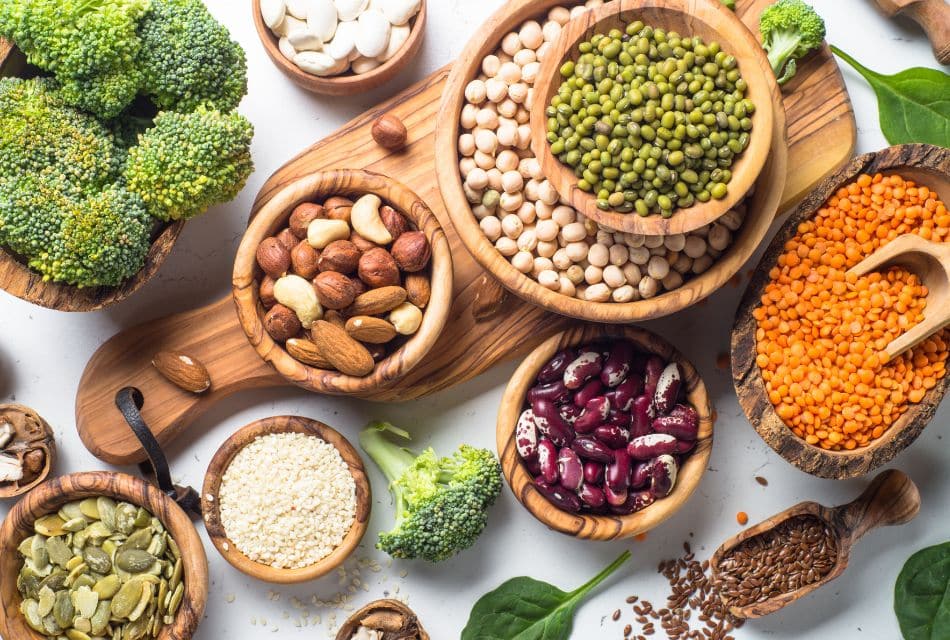
Raw materials such as peas, chickpeas, lentils, beans, rice, corn, buckwheat, quinoa, and amaranth allow for richer, more natural creations with a distinct nutritional profile. At Molendum, these raw materials are transformed into solutions—such as functional flours, crisps, and texturates—that provide texture, stability, and flavor, helping brands formulate clean and tasty products without artificial additives.
Ready-to-Eat (RTE) and Healthy Convenience
Consumption of ready-to-eat products continues to grow, driven by consumers seeking convenience without compromising on health or naturalness. This trend favors the use of high-quality plant-based proteins, natural texturizers, functional ingredients, and plant-forward offerings with simplified formulations, catering to different consumption occasions and healthier premium options.
In this scenario, Molendum’s functional plant ingredients represent a key opportunity for brands. They improve texture, flavor, and stability in categories such as ready meals, fillings, sauce bases, and premium healthy prepared options, facilitating cleaner formulations aligned with modern expectations.

CONCLUSION
2026 marks a turning point for the food industry: transparency, versatility, and real nutritional value are non-negotiable. Brands need ingredients that combine functionality, sustainability, and technical performance without complicating labels or the sensory experience.
In this context, Molendum positions itself as a strategic partner thanks to its portfolio of ingredients: native and heat-treated flours, predust, and binders, as well as breadcrumbs and textured products, all made from cereals, legumes, and ancient grains, capable of driving clean, stable, and nutritious formulations. Its ingredients enable the creation of ready-to-eat products with a shorter ingredient list, featuring good texture, flavor, color, and aroma, and a nutritional profile that directly meets the expectations of today’s consumers.